
Creatine
How to use
Recommended product
To help you put this advice into practice, we select relevant products on Amazon, focusing on the best possible value for money. A targeted selection to save you time and make your choice easier.
These links are part of our affiliate partnership with Amazon: if you purchase something through them, we may earn a commission.
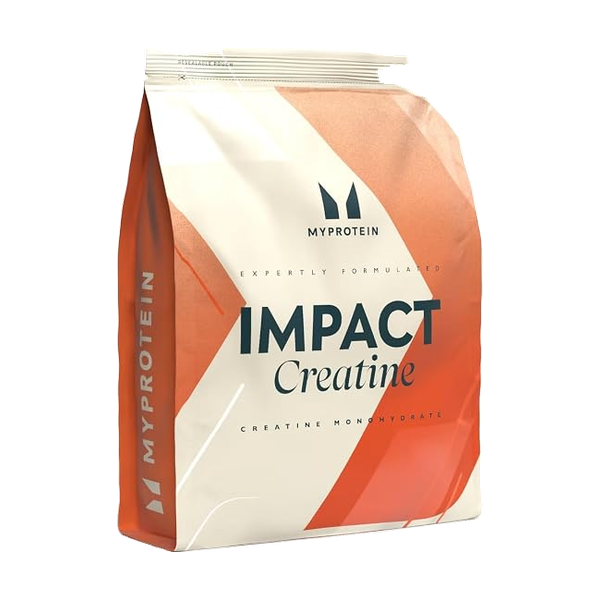
Creatine 500 g — Myprotein
Choosing a simple creatine
Choose creatine monohydrate, with a readable composition and a clearly indicated quantity. A pure powder is enough; you don’t need a formula that combines multiple forms, stimulants, or sugar. Micronization concerns particle size and can facilitate mixing, without transforming the molecule. Compare the price per useful serving, rather than the size of the jar or the number of arguments on the label.
The Doppelherz product already associated with the sheet uses Creapure raw material. This choice concerns in particular manufacturing and quality; it does not mean that this monohydrate necessarily produces more muscle than another monohydrate of comparable quality. If you participate in competitions with anti-doping controls, also choose a product whose batch has been tested by a program adapted to athletes.
Measure and prepare the portion
Read the daily portion on your packaging and use the device provided, or a scale precise enough for these small quantities. The current instructions for Doppelherz 500 g indicate a level measuring spoon of 3.5 g in 150 ml of water, each day. This serving contains 3.5 g of monohydrate, or 3 g of creatine. Check your own jar if the formula or packaging changes; do not confuse the weight of powder and the quantity of creatine advertised.
Mix the powder then consume the preparation, rather than keeping an already prepared drink for a long time. Water is fine; depending on the product, creatine can also be taken with a meal or food. Adding a juice or a very sweet drink is not an obligation. Keep your hydration adapted to the heat and effort, without imposing several extra liters on yourself just because you take creatine.
Install a daily outlet
Choose an action that already exists every day: prepare breakfast, lunch or have a snack. Formulate a specific benchmark, for example “after preparing my lunch, I measure my portion”. Creatine acts by increasing reserves; it does not need to be taken just before a series. Associating the intake only with the gym risks making you forget the days without training.
Keep the measuring spoon with the pot, in a dry place and in accordance with the storage instructions, and plan the portion for travel. A reminder can help at first if your schedule varies. After an isolated forgetting, simply resume the usual dose: do not automatically double the next one. Reserves do not disappear in a day; regularity over the weeks counts more than a perfect series of shots.
The charging phase is optional
Without load, moderate daily intake increases muscle reserves gradually, generally over about three to four weeks. This is the simple option chosen here, and it avoids multiple takes. A charge is mainly used to obtain saturation more quickly; it does not guarantee a better final result when reserves subsequently reach a comparable level.
Studied loading protocols often use around 20 g of monohydrate per day, divided into four doses for five to seven days, then a maintenance dose. These are research and sports practice protocols, distinct from the daily portion provided for the recommended product. Do not exceed its instructions to reproduce an improvised charge; If rapid saturation is necessary in a sporting context, have the protocol defined with a competent professional.
Monitor effect and tolerance
Above all, evaluate the sessions over several weeks: loads, repetitions, recovery between efforts and progress of the program. Creatine is not a stimulant whose effect should be felt immediately. Weight may increase initially with body and muscle water. If you are following fat loss, also look at the trend over time and waist size, rather than concluding a failure on the scale alone.
A large intake in one go can cause digestive discomfort. Keep the recommended serving size and try to take it with a meal if this improves tolerance; If the problems persist, stop and seek advice. Report the supplement to your caregiver, especially before a kidney check-up. With known kidney disease, pregnancy or treatment likely to affect the kidneys, have the appropriateness of the intake checked before starting.
Sources
- Creatine | ASC (new tab)
- International Society of Sports Nutrition position stand: safety and efficacy of creatine supplementation in exercise, sport, and medicine (new tab)
- Common questions and misconceptions about creatine supplementation: what does the scientific evidence really show? (new tab)
- Muscle creatine loading in men (new tab)
- Doppelherz CREATINE MONOHYDRATE Creapure® | Doppelherz (new tab)
- Bioavailability, Efficacy, Safety, and Regulatory Status of Creatine and Related Compounds: A Critical Review (new tab)
- Effect of creatine supplementation on kidney function: a systematic review and meta-analysis (new tab)
- Does it really take 66 days to form a habit? We asked the expert, Dr Pippa Lally | University of Surrey (new tab)
Articles that may interest you
 Nutrition

 GroomingGroomingGrooming

About this content
The contents do not claim any medical or paramedical qualifications and are not systematically reviewed by a healthcare professional.
The site shares general information and practical tips. It does not make a diagnosis, does not prescribe any treatment and does not replace advice adapted to your situation.