
Lip care
How to use
Recommended products
To help you put this advice into practice, we select relevant products on Amazon, focusing on the best possible value for money. A targeted selection to save you time and make your choice easier.
These links are part of our affiliate partnership with Amazon: if you purchase something through them, we may earn a commission.
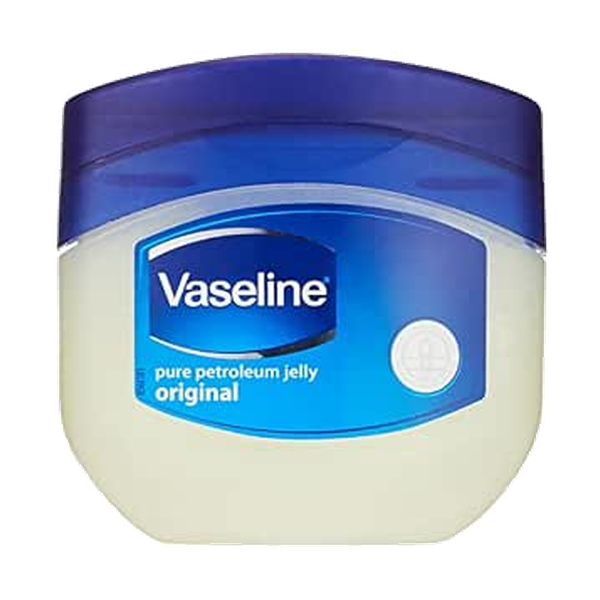
Lip balm 100 ml — Vaseline
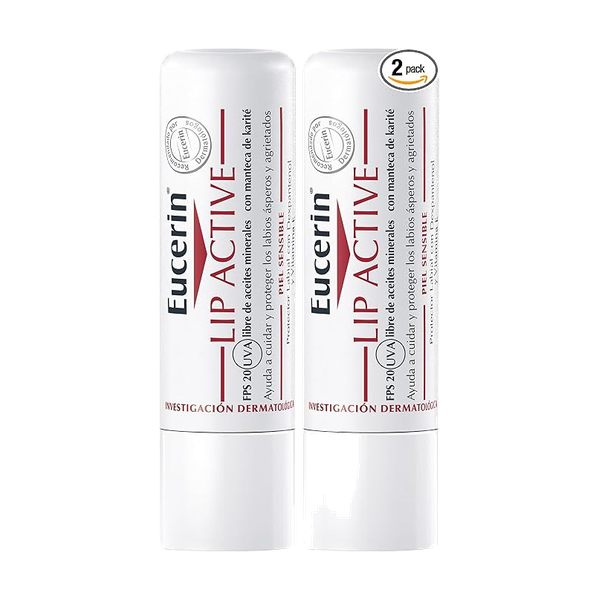
Lip balm stick SPF 20 2×4.8 g — Eucerin
Choose according to comfort, not according to the number of assets
A lip balm stick is convenient during the day; a richer ointment may be more comfortable at night if your lips are very dry. Look for a formula you tolerate well that leaves a comfortable protective layer. Petrolatum, dimethicone and other fatty ingredients help reduce water loss or soften the surface. A higher price, sweet taste or cooling sensation does not guarantee better results.
The lip balm recommended here is an option for everyday dryness. Formulations and sun-protection claims can differ by market and change over time, so check the packaging of the exact product you receive. Do not assume a moisturizing balm gives adequate sun protection; for sun exposure, look for a lip product labeled SPF 30 or higher. If cosmetics irritate your lips, a simple fragrance-free formula may suit you better.
Apply without rubbing or preparing the skin
Glide the stick over the visible surface of your lips to leave an even layer. For a pot, use a clean finger. There is no need to brush, scrub or remove loose skin first: you can apply the balm directly. Avoid repeatedly dragging the stick over a painful crack, and do not share your lip balm.
Reapply when the protective layer wears off or your lips start to feel tight again, for example after eating. At night, an ointment may stay in place longer without meals rubbing it off. Aim to keep your lips comfortable; if they feel fine, there is no need to watch the clock or apply more every few minutes.
Let the small skins come off on their own
When a piece of skin catches, it can be tempting to pull it off with your teeth or fingers. This can reopen fragile skin and make it bleed. Soften the surface with balm instead and let the skin renew itself. Avoid sugar scrubs, toothbrushes and exfoliating acids on lips that are already dry or cracked.
Consider other products that touch your lips, too. Keep facial retinol and exfoliants off them, and rinse away toothpaste residue after brushing. If irritation started after a new cosmetic, stop using it. Stinging does not necessarily mean a product is working: continuing may simply prolong the reaction.
Adapt protection outside
For time outdoors in the sun, use a broad-spectrum lip balm with SPF 30 or higher. Reapply about every two hours outdoors, and after eating or drinking if the protective layer has worn off. Moisturizing and UV protection serve different purposes: a rich balm without an SPF rating does not replace a sunscreen product. This complements sun protection for your face.
In cold or windy weather, a scarf can help shield your lips. Very dry indoor air can also contribute to discomfort; a properly maintained humidifier may help. Drink normally and address dehydration if needed, rather than forcing yourself to drink extra liters in the hope of fixing local irritation that way.
Recognize the limits of the balm
Seek medical advice if your lips remain inflamed after two to three weeks of appropriate care. Have them checked sooner for significant pain, warmth, swelling, discharge or a persistent sore. A balm helps with dryness, but it cannot diagnose or treat every infection or condition that affects the lips.
Cracks at the corners of the mouth need particular attention. Saliva can prolong irritation, sometimes alongside an infection, so this is not always simple chapping. Avoid trying steroid, antifungal or antibiotic creams at random. A professional can identify the cause and recommend suitable treatment, especially if the cracks keep returning.
Sources
- 7 dermatologists' tips for healing dry, chapped lips (new tab)
- Sore or dry lips (new tab)
- Soin lèvres sèches et gercées | EUCERIN (new tab)
- Angular Cheilitis: Symptoms, Causes, and Management with Images — DermNet (new tab)
- Allergic contact cheilitis (new tab)
- Emollients and Moisturizers (Moisturisers) — DermNet (new tab)
Articles that may interest you
 Nutrition


 Grooming
 HabitsHabits

About this content
The contents do not claim any medical or paramedical qualifications and are not systematically reviewed by a healthcare professional.
The site shares general information and practical tips. It does not make a diagnosis, does not prescribe any treatment and does not replace advice adapted to your situation.