
Skin moisturization
How to use
Recommended product
To help you put this advice into practice, we select relevant products on Amazon, focusing on the best possible value for money. A targeted selection to save you time and make your choice easier.
These links are part of our affiliate partnership with Amazon: if you purchase something through them, we may earn a commission.
Moisturising cream 453 g — Cetaphil
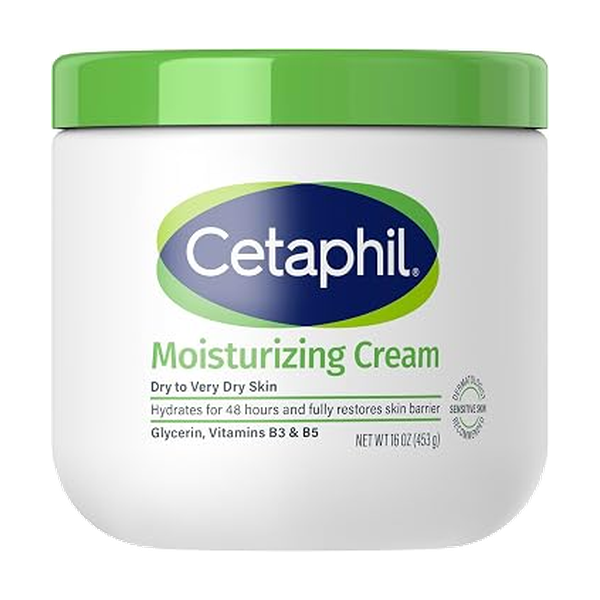
Choose according to the comfort of your skin
If your face feels tight, has small flakes or remains rough after washing, try a more protective cream. If it shines easily, a light lotion or gel-cream will often be nicer. Combination skin may receive more product on the cheeks than on the forehead. You don't need to find a perfect category before you start: comfort throughout the day is a more useful benchmark than the label "normal skin."
The CeraVe face cream presented here is intended for normal to dry skin. It notably combines glycerin, ceramides, niacinamide and hyaluronic acid, in a fragrance-free formula claimed to be non-comedogenic. This is an option for facial tightness and dryness, not necessarily the preferred texture for all oily skin types.
Apply a comfortable layer
After cleansing, dab face with a clean towel. Many moisturizers apply well to skin that is still damp, which helps retain that water. For the associated CeraVe cream, the brand indicates clean, dry skin and a dab to distribute over the face and neck. Follow the instructions for your product and avoid the eye area if, as here, the manufacturer requests it.
Spread without rubbing for a long time and think about the areas that are really tight, including under the beard if the skin there is dry. Adjust the quantity to obtain a comfortable film, without trying to leave a thick layer. If the treatment is fuzzy, try using less or simplifying the layered products. Lips have special needs: instead use a balm designed for them, as explained in Lip care.
Place it in a simple routine
In the morning, moisturizer generally comes after any targeted treatments and before sun protection. Some sunscreens are already hydrating enough to make a separate cream unnecessary, especially if your skin remains comfortable. In the evening, a cream can complete the routine. If you are following a prescribed treatment, keep the order of application recommended by the professional: the needs of the treatment come before a general cosmetic regimen.
An application after washing is a good starting point. Add another if the skin becomes dry again, or choose a richer formula when cold, wind or heating increase tightness. Conversely, you can lighten the texture when it’s hot. There is no need to keep the exact same amount all year round or add a hydrating serum to a cream that is already sufficient.
Check that the routine really helps
The first useful sign is simple: the skin pulls less and remains comfortable longer. Scales and roughness may require several days of regular care to improve. Avoid changing cleanser, cream and active ingredients at the same time: you will have difficulty knowing what is right for you. Gentle, brief washes also help; a cream does not always compensate for repeated cleaning with very hot water.
If the product causes persistent burning, itching, or unusual redness, stop using it rather than trying to “get the skin used to it.” Recurrent patches, cracks or dryness that resists treatment may require medical advice. A moisturizer helps treat many fragile skin types, but is not enough to treat all causes of irritation.
Sources
Articles that may interest you
 Grooming

 GroomingGroomingGrooming
About this content
The contents do not claim any medical or paramedical qualifications and are not systematically reviewed by a healthcare professional.
The site shares general information and practical tips. It does not make a diagnosis, does not prescribe any treatment and does not replace advice adapted to your situation.