
Beta-carotene
How to use
Recommended product
To help you put this advice into practice, we select relevant products on Amazon, focusing on the best possible value for money. A targeted selection to save you time and make your choice easier.
These links are part of our affiliate partnership with Amazon: if you purchase something through them, we may earn a commission.
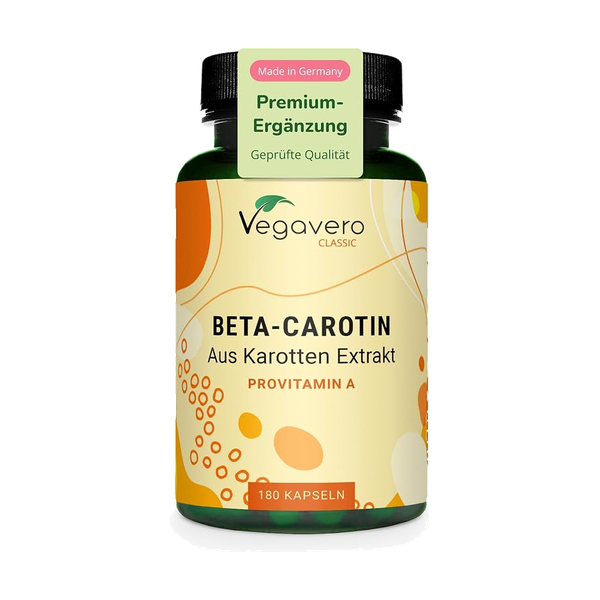
Beta-carotene 7 mg ×180 — Vegavero
Choose a few foods you like
Start with two or three sources that are easy to buy and cook: carrots, squash, sweet potato, spinach or kale. Apricots and certain melons can also vary the intake depending on the season. Green vegetables contain carotenoids despite their color. You don't need to eat exclusively orange or turn every meal into a milligram calculation.
Integrate them into an existing meal
A simple guideline is to include a portion of a vegetable rich in carotenoids in a usual meal, then vary it throughout the week. This marker is used to establish the routine; it is not a validated aesthetic dose. Think grated carrots as an appetizer, spinach in an omelette, or roasted squash as a side. Also keep other fruits and vegetables.
To prevent the routine from depending on your motivation for the day, put these foods on your shopping list and prepare a few servings in advance. Frozen spinach or vegetable soup can make busy days easier. Choose recipes that you want to make again. After a day without these foods, simply return to regular meals rather than trying to compensate with a huge amount.
Add a little fat
Carotenoids are absorbed with the lipids from the meal. An olive oil vinaigrette, eggs or a little avocado can accompany the vegetables, depending on your dish. It is not necessary to add a lot of oil: keep a quantity compatible with your diet. The practical idea is not to organize all your carotenoid intake in preparations that are systematically devoid of fat.
Alternate raw and cooked preparations according to your preferences. Grating, cutting, mixing or cooking certain plants can make their pigments more accessible to digestion, with effects that depend on the food and the preparation. A carrot puree or a squash soup can therefore find its place perfectly. No single cooking method is essential to obtain an effect on the complexion.
Leave several weeks for color
The changes studied appear over several weeks, particularly in works lasting four to six weeks. Keep your new organization long enough to be able to evaluate it, without waiting for a transformation in a few days. The result also depends on your starting diet: someone who already eats a lot of colorful plants may have less room for change.
If necessary, take a reference photo, then compare after a few weeks in the same room, at a similar time and with the same settings. Avoid filters and very hot lights which already give a golden effect. Look at the whole face rather than an isolated detail. A subtle difference may work for you, but it won't necessarily be evident in every photograph.
If you prefer a supplement
The product Balance Nutrition 240 tablets already associated with this sheet remains an optional option. The manufacturer's page says daily intake, but check the dose and ingredients on your box. The amount of carrot extract, beta-carotene and vitamin A are not interchangeable measurements. Commercial promises of a quick tan cannot predict your result.
Follow the label and avoid combining several “complexion” or multivitamin formulas containing the same ingredients. For a color objective, there is no universal dose guaranteeing a pleasant result. If you smoke, have smoked or are exposed to asbestos, choose foods: high-dose supplements have increased the risk of lung cancer in these populations.
Adjust to desired result
A warmer shade can be interesting; a distinctly yellow-orange color corresponds to a contribution that has become too important for the desired result. If it appears, reduce highly concentrated sources and any supplement. The coloring linked to carotenoids gradually fades when intake drops. You can keep meals varied without continuing to push the color further and further.
Sources
- Vitamin A and Carotenoids - Health Professional Fact Sheet (new tab)
- You Are What You Eat: Within-Subject Increases in Fruit and Vegetable Consumption Confer Beneficial Skin-Color Changes (new tab)
- Daily Consumption of a Fruit and Vegetable Smoothie Alters Facial Skin Color (new tab)
- Consuming High-Carotenoid Fruit and Vegetables Influences Skin Yellowness and Plasma Carotenoids in Young Women: A Single-Blind Randomized Crossover Trial (new tab)
- Modeling the dose effects of soybean oil in salad dressing on carotenoid and fat-soluble vitamin bioavailability in salad vegetables (new tab)
- Carotenoid deposition in plant and animal foods and its impact on bioavailability (new tab)
- Carotenodermia in men with elevated carotenoid intake from foods and beta-carotene supplements (new tab)
- balancenutrition.com · betacarotene-abbronzatura-forte-240-compresse-scorta-8-mesi-da-estratto-di-carota-integratore-melanina-naturale (new tab)
Articles that may interest you
 Nutrition

 NutritionNutrition
 Nutrition
About this content
The contents do not claim any medical or paramedical qualifications and are not systematically reviewed by a healthcare professional.
The site shares general information and practical tips. It does not make a diagnosis, does not prescribe any treatment and does not replace advice adapted to your situation.